

Recently, the Ministry of Industry and Information Technology officially announced the first batch of market access approvals for L3 conditional autonomous driving models in China. Two models, adapted for expressway sections and urban enclosed areas respectively, will launch pilot operations in designated zones of Beijing and Chongqing.
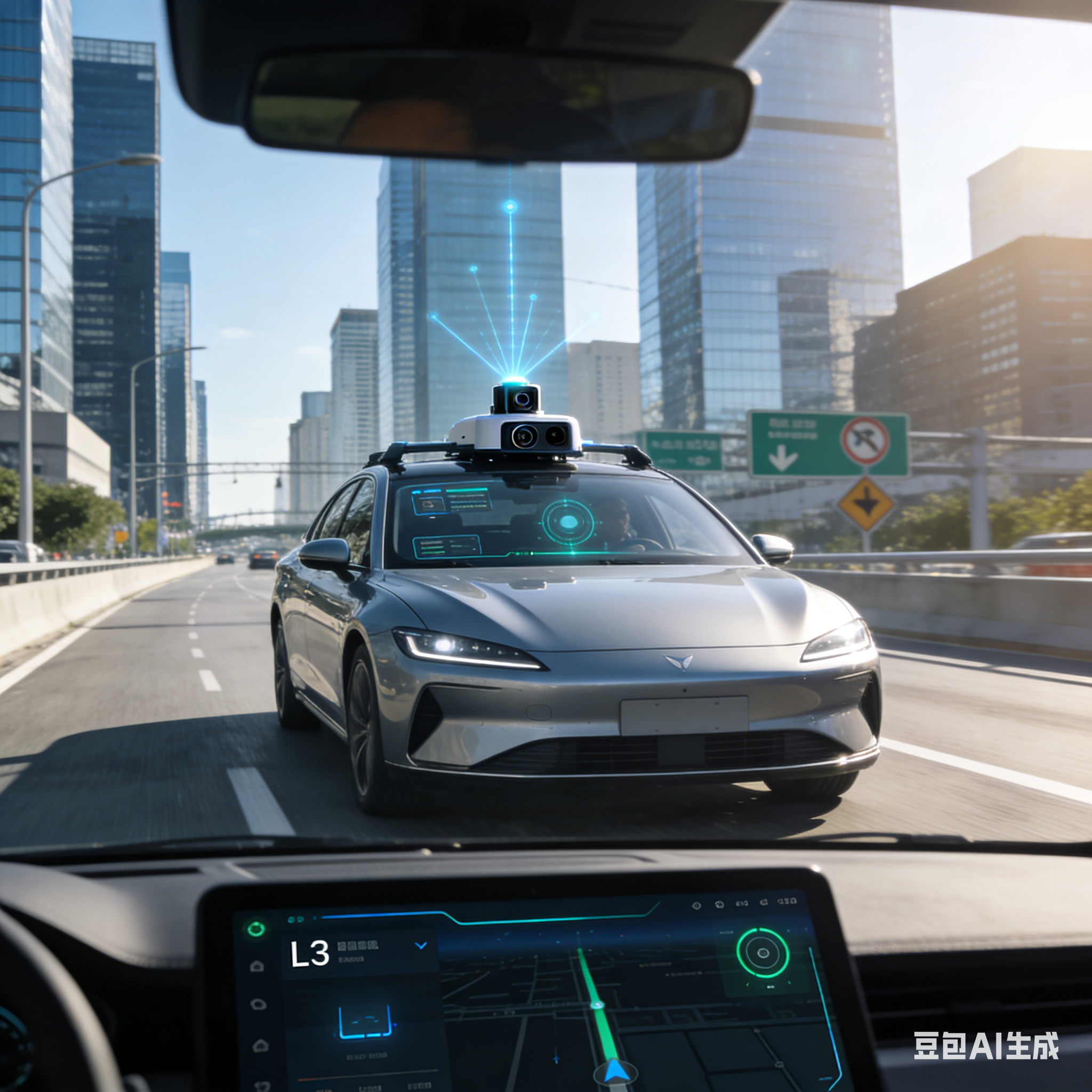
Why were Beijing and Chongqing chosen as pilot cities for L3 autonomous driving? What do consumers need to know about this? And what development opportunities will the pilot bring to the industry?
L3 Autonomous Driving Is Here! Why Are Beijing and Chongqing the Pilot Cities?
1. What is L3 Autonomous Driving? How Does It Differ from L2?
l Under China’s Automobile Driving Automation Classification, driving automation is categorized into 6 levels (L0 to L5): L0-L2 are defined as "assisted driving"; L3 refers to "conditional autonomous driving," where the system assumes full driving responsibilities under specific scenarios.
l The core distinction between L2 and L3 lies in the role and responsibility allocation between the system and the driver: it transitions from "driver-assisted" to "system-led" operation.
l Future L4 & L5: These correspond to "highly autonomous driving" and "full autonomous driving"—ultimately enabling steering-wheel-free vehicles that can operate in any environment.
2. Why Are Beijing and Chongqing the First Pilot Cities?
l The Changan SC7000AARBEV pure electric sedan (piloted in Chongqing) supports autonomous driving in single lanes of highways and urban expressways under traffic congestion. Currently, it is only activated on specific sections in Chongqing (e.g., Inner Ring Expressway, New Inner Ring Expressway, Yuyu Boulevard), with a maximum speed limit of 50 km/h.
l The Jihu BJ7001A61NBEV pure electric sedan (piloted in Beijing) enables autonomous driving in single lanes of highways and urban expressways. It is currently restricted to specific sections in Beijing (e.g., Taijing Expressway, Airport North Line Expressway, Daxing Airport Expressway), with a maximum speed limit of 80 km/h.
l The pilot is limited to designated sections in Beijing and Chongqing to prioritize safety and phased progress. Both cities offer advantages for data accumulation: Chongqing has complex traffic terrain, while Beijing has diverse traffic scenarios—selecting these two locations allows testing the system’s adaptability across different environments.
3. Why Were These Two Models Approved?
l The Ministry of Industry and Information Technology, together with relevant departments, organized industry resources to conduct a comprehensive assessment of the pilot manufacturers’ R&D capabilities, testing systems, and emergency support capacities.
l Third-party testing institutions and experts carried out systematic evaluations on public-concerned risks (e.g., functional safety and cybersecurity) of the pilot models’ intended capabilities.
l On this basis, the management and emergency support capabilities of the pilot host cities were also verified. Finally, two consortia were selected through a merit-based process to obtain the first batch of pilot access approvals.
4. What Does L3 Mean for Drivers?
l L3 conditional autonomous driving allows the system to act as a "temporary driver" and independently perform driving tasks under specific conditions and scenarios.
l When the system issues a takeover request, the driver must take control of the vehicle promptly. Thus, full reliance on the intelligent system is not permissible.
l Autonomous driving is not equivalent to a "chauffeur service"—the driver remains the ultimate responsible party.
5. Can Individual Car Owners Use These Models Right Away?
l Currently, the pilot models are not available to ordinary consumers; they are only for the operation of pilot units. Consumers can experience the autonomous driving function via ride-hailing services.
l As the pilot program deepens and the industry gains a better understanding of safety risk patterns, relevant restrictions are expected to gradually relax, and autonomous driving will progressively integrate into the public’s daily life.
6. What Does L3 Mean for Future Living Scenarios?
l The "conditional" access (limiting autonomous driving-enabled sections to typical, low-risk scenarios) ensures the safe and orderly implementation of autonomous driving technology.
l With the steady development of intelligent and connected technologies (and the accelerated integration of AI and large models into vehicles), this announcement marks that China’s intelligent connected vehicle access and road pilot program has officially entered the on-road trial phase.
7. How Can Automakers Seize Development Opportunities?
l For the entire industry, this means China’s autonomous driving is shifting from technical verification to mass production application, and marks a key step forward in China’s autonomous driving access management.
l Intelligence has evolved from an "optional extra" to a "must-have" for automakers—with the focus shifting from "whether to have it" to "whether it is safe and mature."
l The rollout of L3 autonomous driving involves collaboration across complete vehicles, components, software algorithms, communications, and data services. It will drive the upstream and downstream of the industrial chain to shift from "supply" to "co-creation."
8. What Impact Will It Have on China’s Automotive Market?
l The advancement of intelligent connected vehicle access and road pilot programs injects strong momentum into technological innovation and generational upgrades in China’s automotive sector, while also providing valuable practical experience for standard-setting.
l As L3 autonomous driving models are commercialized, domestic new energy vehicles will not only solidify their leading position in the domestic market but also accelerate their global expansion leveraging technological and cost advantages—emerging as rule-makers and technology leaders in the intelligent connected vehicle field.
(The images in this article are generated by Doubao AI)
