

Let “Smart Vehicles” Unlock More New Applications
Source: March 9, 2026, 08:40 China Transportation News
"The ultimate model for the innovative development of autonomous driving technology may be the creation of a comprehensive intelligent service platform that integrates living, working, and leisure. Perhaps in the not-too-distant future, everyone will own an autonomous vehicle, just as we use smartphones today. ” Wang Xianjin, a member of the National Committee of the Chinese People’s Political Consultative Conference (CPPCC) and Vice President and Chief Engineer of the Research Institute of the Ministry of Transport, shared his vision for smart transportation during an interview with reporters.
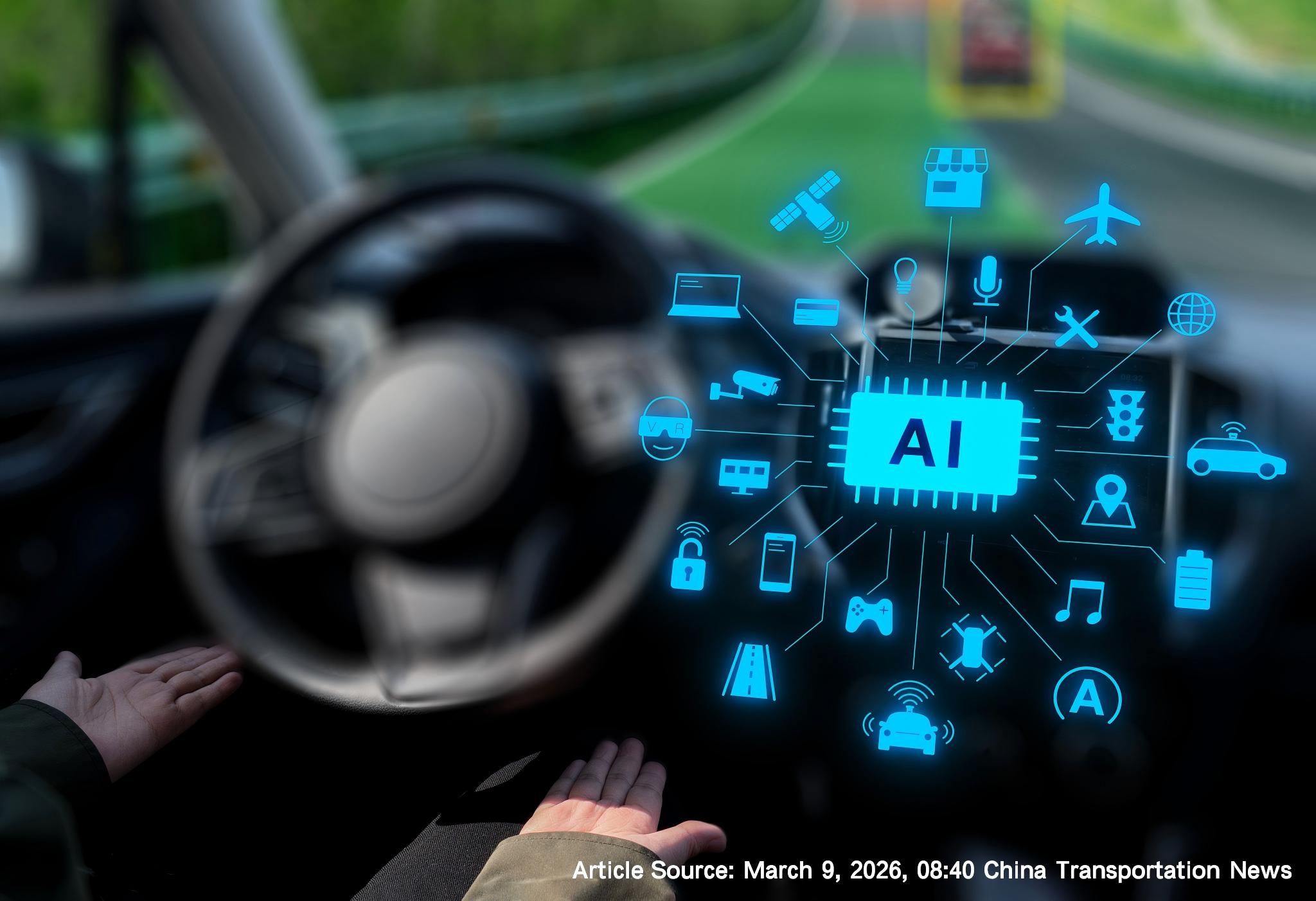
Autonomous driving is a leading technology in the fields of smart transportation and smart logistics, and a landmark innovation project for the development of new-quality productive forces. In recent years, Wang Xianjin has submitted five proposals regarding supporting the development of autonomous driving technology, expanding testing, expanding pilot programs, and promoting compliant applications, all of which have received positive responses from relevant departments.
“Currently, autonomous driving applications in China are still primarily limited to small-scale, regional pilot projects, with most cities opening only portions of their road networks within specific areas,” Wang Xianjin noted based on his research. He found that pilot demonstrations confined to single cities and limited in scale result in a lack of regional coordination for scenario validation, creating a key bottleneck in advancing large-scale deployment and industrialization. He believes the solution lies in expanding pilot projects to drive scenario-based development and accumulate data based on diverse real-world scenarios.
Wang Xianjin suggested prioritizing the selection of eligible urban clusters and metropolitan areas within “vehicle-road-cloud integration” pilot regions—such as the Beijing-Tianjin-Hebei region, the Yangtze River Delta, the Pearl River Delta, and the “Wuhan-Xiangyang-Shiyan-Suizhou” area in Hubei—to establish 5 to 10 regional-level engineering validation platforms. This would create an autonomous driving application cluster with global influence, enabling “smart vehicles” to unlock more new scenarios.
“Traditional industries must not be overlooked either,” Wang Xianjin noted. “We can integrate sectors such as taxis, buses, trunk logistics, and express delivery to conduct pilot demonstrations involving no more than 5% of the existing vehicle fleet in these scenarios.” He specifically emphasized the need to explore supporting measures—including legal frameworks, infrastructure, and business models—to strengthen public trust and help China’s autonomous driving industry bridge the gap toward industrialization and upgrading.
