The public transportation sector plays a crucial role in testing the implementation of new energy strategies at a national level. It has gone through a transition by changing different power sources such as fuel, natural gas, hybrid, and pure electric.
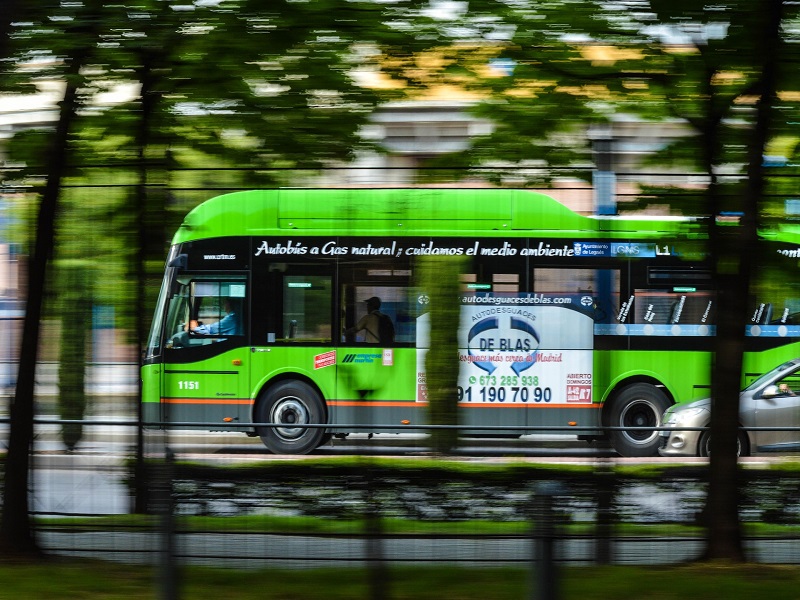
Now, in the light of “Dual Carbon” goals, the hydrogen-powered bus has become a new mobility revolution in this field. This bus can tackle the problems that natural gas vehicles faced (for example, insufficient power and seasonal supply), while it also solves the issue of short battery life and limited range of pure electric vehicles. This is very possible, as the hydrogen-powered bus can bring advantages such as zero-emission operation, fast refueling, extended driving range, and outstanding low-temperature tolerance (it can be stored at -40℃ and cold start at -30℃). Therefore, a lot of public transport operators are rushing the introduction of hydrogen-powered bus fleets, which have already been used on a large scale in cities like Beijing, Zhangjiakou, and Dalian.
Behind this development is the closed-loop management platform of hydrogen-powered bus operation. This platform combines cloud computing, the Internet of Things, and big data technologies and organizes an amazing collection and analysis of operational data of both the vehicle and the hydrogen refueling station, resulting in linking up the whole hydrogen chain—from storage to application. Besides, it allows safety monitoring at a distance and asset management digitalization of both. The exceptional popularity of hydrogen-powered buses illustrates the profound execution of the “Dual Carbon” public transport strategy and also shows that the new energy transition in the industry has gone into a fast lane.
Meanwhile, the intelligence- and connectivity-based technology wave globally is significantly transforming the automotive industry. Intelligent automotive technology is still rapidly moving forward, with very advanced theoretical research and practical application of intelligent driving occurring simultaneously. The tendency of intelligence and connectivity integration is so obvious. In such a situation, automatic driving has been considered as a technology that has the greatest potential to change the world and has powered the New Energy Vehicle industry to create new quality productive forces.
Performance-wise, for example, an automatic driving controller that operates on dual Orin chips at a high level can adequately meet the requirements of different scenarios and vehicle models ranging from simple assisted driving up to high-level automatic driving. The vehicles used in shared mobility scenarios through the application of real-time interconnected positioning and automatic docking technologies provide the public with highly efficient and convenient solutions for both “first and last mile” travels. Generally, such services integrate various features such as one-click hailing, intelligent speed limiting, dynamic obstacle avoidance, multi-vehicle platooning, and remote monitoring. They are considered the most representative examples of technological innovations and achievements in fields such as LTE-V/5G communication, automatic driving, new energy vehicles, and shared services.
The lovely intelligent buses in the future are also worthy of mention. They are equipped with high-level automatic driving systems and combine a comfortable journey with the shared concept, as they have very cool, intelligent, and interactive sign designs. They can even be used as business and leisure spaces at the same time, thus completely changing the traditional mobile spatial experience of passengers. In principle, they can be designed as unmanned mobile lounges, top-class multi-functional business cars, micro-circulation buses, and sightseeing shuttles. There are several suitable scenarios, such as big parks, ecological corridors, industrial campuses, universities, and fixed-route suburban areas, where the intelligent unmanned shuttle service can operate.
Innovation in new energy vehicles is not limited to the change of energy sources only; a big part of it is the profound integration with the most advanced technologies like automatic driving and vehicle connectivity. The extensive use and smart operation of hydrogen-powered buses together with the deployment of automatic driving technology in multiple scenarios are already delineating the future intelligent transportation ecosystem. The two continue to drive the evolution of transportation towards being environmentally friendly, efficient, and technologically advanced, as demonstrated in the CITSE platform.
FAQ – Frequently Asked Questions
1. Where and when will the Expo be held?
The event will take place days from May 13 to 15, 2026. Furthermore, the place of the event will be the Xiamen International Conference and Exhibition Center (XICEC), Xiamen, China, and the exact location is Hall C.
2. What is the size of the exhibition?
The place of the event will be about 40,000 m². The main topic of the event will be 350 companies. Besides, the event also has the ambition to draw at least 30,000 professional visitors from different parts of the world.
3. What kind of sports are there?
The organizing committee is prepared to organize more than eighty expert boards and activities. Moreover, they will discuss such topics as intelligent mobility, communication in transportation, safety, and sustainable development.
4. How many countries and regions are there?
Smart transportation could be a world summit where representatives of more than eighty different countries and regions are invited.
5. Cooperation possibilities exist, right?
We couldn't be more in agreement! The event, which consists of more than 1,000 global partners, is an excellent point where business cooperation, technological exchange, and investment exploration can happen.
6. Who can I talk to for the info?
Suppose you want to get even more facts than this. In that case, you may talk with the Organizing Committee via the "Contact Us" segment at the official website.