
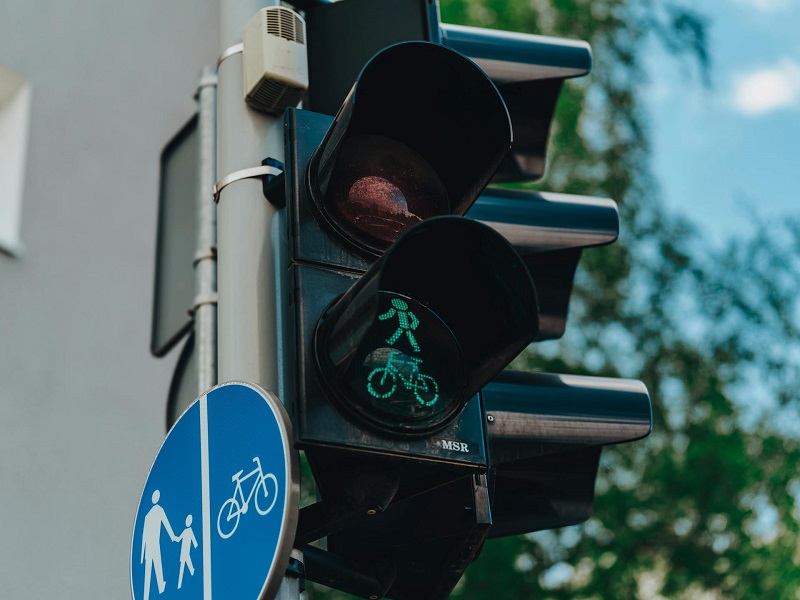
Traffic Signal Control Systems play an indispensable role in the modern intelligent transportation frameworks. Leveraging cutting-edge Traffic Signal Control Systems can be a really effective way of dealing with traffic congestion and increasing the efficiency of an urban road network. At the end of the day, almost all of the complex road traffic management solutions heavily depend on these systems for execution.
It is impossible to overstate the importance of traffic data to signal regulation and transportation planning. Thus, a scientifically comprehensive data collection system is a prerequisite for the development of smart transportation. The systems save traffic information taken from signal controllers at an interval set by the user and have the capability to work with various detectors such as video and inductive loops. The central service is made up of a server cluster including central servers, database servers, and regional optimization servers. Via the control platform can be done such functions as signal controller management, parameter setting, live monitoring, handling of special tasks, statistical inquiries, and alarm management. By applying advanced optimization models to detector measurements of traffic volume and time occupancy, the system executes real-time adjustment of signal timing to achieve different coordinated control functionalities.
Traffic Signal Control Systems are one of the core components of the intelligent traffic management, they can, upon request, execute an entire network of signal timing plans automatically and in a concerted fashion thus affecting a balanced traffic flow throughout the road network which, at the end of the day, will bring about the minimization of the number of stops, delay, and pollution of the environment as well as the maximization of the transportation efficiency of the road system.
Traffic Signal Control Systems optimization has become more than a mere aspect of regional comprehensive management due to the continuous urban road networks expansion and vehicle population growth. Traffic departments have slowly set up intelligent signal control platforms that facilitate centralized arterial coordination through networked signal controllers within the regions. Furthermore, real-time traffic detection equipment has been installed to back up Self-Adaptation Control.
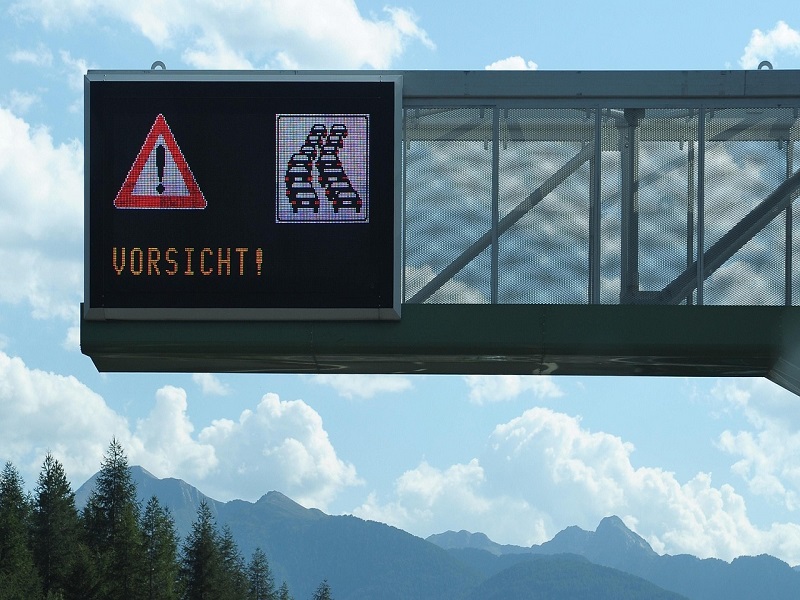
Adaptive Traffic Signals basically consist of using real-time information to adjust the light when different times of day (rush hour, etc.) to help manage the flow of traffic through an intersection and keep the vehicles moving. They are a more advanced traffic-control concept that, when properly implemented in combination with other intelligent transport systems, could lead to remarkable effects with regard to the improvement of the traffic conditions and the alleviation of traffic jams. They are equipped to detect a traffic jam situation immediately and respond to it proactively hence preventing it if not reducing it greatly, therefore improving the overall performance of the road network in terms of dealing with complex traffic situations.
FAQ – Frequently Asked Questions
1. Where and when will the Expo be held?
The event will take place days from May 13 to 15, 2026. Furthermore, the place of the event will be the Xiamen International Conference and Exhibition Center (XICEC), Xiamen, China, and the exact location is Hall C.
2. What is the size of the exhibition?
The place of the event will be about 40,000 m². The main topic of the event will be 350 companies. Besides, the event also has the ambition to draw at least 30,000 professional visitors from different parts of the world.
3. What kind of sports are there?
The organizing committee is prepared to organize more than eighty expert boards and activities. Moreover, they will discuss such topics as intelligent mobility, communication in transportation, safety, and sustainable development.
4. How many countries and regions are there?
Smart transportation could be a world summit where representatives of more than eighty different countries and regions are invited.
5. Cooperation possibilities exist, right?
We couldn't be more in agreement! The event, which consists of more than 1,000 global partners, is an excellent point where business cooperation, technological exchange, and investment exploration can happen.
6. Who can I talk to for the info?
Suppose you want to get even more facts than this. In that case, you may talk with the Organizing Committee via the "Contact Us" segment at the official website.