

Autonomous driving is rapidly becoming one of the main elements of intelligent transport systems and future mobility ecosystems worldwide. The core of autonomous driving products lies in vehicle-road-cloud-network collaborative control and multi-sensor fusion perception, with a comprehensive technical framework being set up to achieve coordinated intelligence not only across the different vehicles but also with the infrastructure, cloud platforms, and communication networks. This collaboration is broadly regarded as an essential strategy to ensure the safety at deployment, large-scale application, and commercial viability of autonomous driving.
Regions worldwide have taken different paths to develop their autonomous driving sectors. The U.S. keeps pushing for autonomous driving via vehicle intelligence and a well-planned C-V2X deployment. Europe is progressively developing cooperative and connected mobility that fits under their ITS frameworks. Japan is combining vehicle-road collaboration with automated driving. Meanwhile, China implements a series of progressively regulatory and standard measures that support autonomous driving products, vehicle-road-cloud-network collaborative control, traffic safety, and infrastructure intelligence, thus creating a secure and scalable development environment.
In the perception layer, autonomous driving products depend on multi-sensor fusion perception to get precise and three-dimensional awareness of the environment. The sensors on the vehicle, such as cameras, millimeter-wave radar, and LiDAR, are adjusted with the roadside sensing units for the accurate detection and motion tracking of vehicles, non-motorized traffic participants, and pedestrians. Real-time traffic signals, road status, and risk warnings are transmitted between vehicles, roadside infrastructure, and cloud platforms through 5G and C-V2X communication, which greatly enhance the driving safety and the ability to adjust to different scenarios.
Through the computing and control domain, autonomous driving products utilize high-performance autonomous driving computing platforms and controller systems. This highest-level platform incorporated perception, positioning, planning, and control algorithms based on multi-sensor fusion perception, which resulted in achieving the accuracy of positioning up to centimeter level and high-frequency data output. Modular and heterogeneous hardware architectures not only support a wide range of sensor interfaces but also communication protocols that allow flexible adaptations to different vehicle types and application scenarios. The accompanying system software has the features of high stability, low power consumption, and long-term continuous operation, paving the way for engineering deployment and scaled implementation.
Vehicle-road-cloud-network collaborative control has a critical impact on the level of intelligence in the system. Cloud control platforms collect vehicle data, roadside perception information, and network status to allow cross-vehicle and cross-road coordinated decision-making. Through cloud-edge collaboration, autonomous driving products get predictions and planning for complex traffic environments, such as urban roads, highways, industrial parks, and enclosed areas. This collaborative control approach successfully offsets the disadvantages of relying on single vehicle intelligence, decreases the perception blind spots, and promotes the overall system safety.
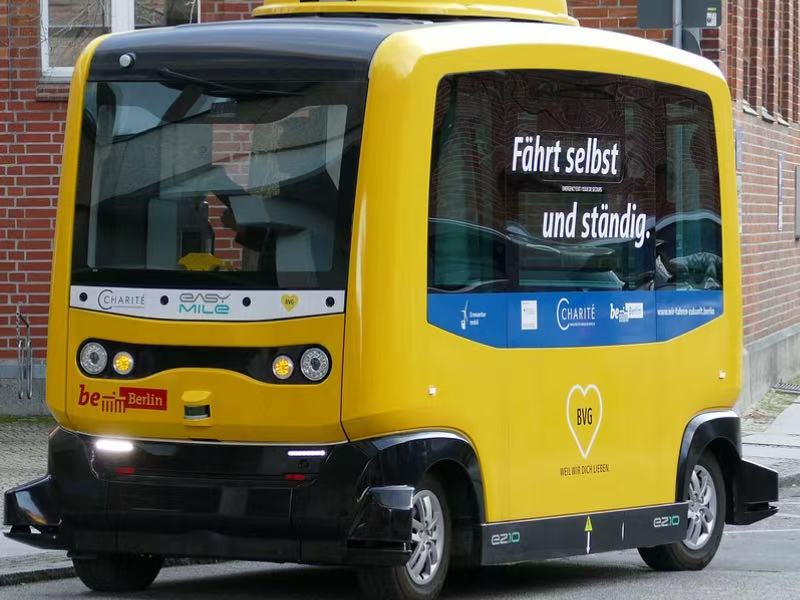
On the ground, the autonomous driving products were effectively put into operation in a variety of situations such as closed-road testing, public mobility services, autonomous shuttles, mining transportation, and “last-mile” mobility solutions. By combining multi-sensor fusion perception with vehicle-road-cloud-network collaborative control, the systems can deliver autonomous parking, dynamic obstacle avoidance, vehicle platooning, remote monitoring, and intelligent dispatching. The solutions are a good demonstration of stable performance, high reliability, and strong adaptability, therefore, are capable of meeting the requirements of continuous operation and industrial-scale promotion.
To sum up, autonomous driving technologies engineered on cutting-edge autonomous driving products, backed by vehicle-road-cloud-network collaborative control and multi-sensor fusion perception, are transforming transportation systems from mere reactive operation to proactive, coordinated intelligence. Such a combined technical scheme delivers a solid, dependable, and reproducible technical base that enables the safe operation, huge-scale deployment, and commercialization of autonomous driving, thus supporting the development of intelligent mobility and smart transport ecosystems.
FAQ – Frequently Asked Questions
1. Where and when will the Expo be held?
The event will take place days from May 13 to 15, 2026. Furthermore, the place of the event will be the Xiamen International Conference and Exhibition Center (XICEC), Xiamen, China, and the exact location is Hall C.
2. What is the size of the exhibition?
The place of the event will be about 40,000 m². The main topic of the event will be 350 companies. Besides, the event also has the ambition to draw at least 30,000 professional visitors from different parts of the world.
3. What kind of sports are there?
The organizing committee is prepared to organize more than eighty expert boards and activities. Moreover, they will discuss such topics as intelligent mobility, communication in transportation, safety, and sustainable development.
4. How many countries and regions are there?
Smart transportation could be a world summit where representatives of more than eighty different countries and regions are invited.
5. Cooperation possibilities exist, right?
We couldn't be more in agreement! The event, which consists of more than 1,000 global partners, is an excellent point where business cooperation, technological exchange, and investment exploration can happen.
6. Who can I talk to for the info?
Suppose you want to get even more facts than this. In that case, you may talk with the Organizing Committee via the "Contact Us" segment at the official website.

